
“The entire process was seamless. The pandit performed the Satyanarayan Puja with complete devotion and we received the video proof the same day.”
Priya Sharma
Mumbai• Satyanarayan Puja

According to Sanatan tradition, immersing the ashes of the departed in the holy Ganga is considered highly sacred and spiritually significant. Performing Asthi Visarjan at Manikarnika Ghat in Kashi is believed to grant peace, salvation (moksha), and divine blessings to the departed soul while bringing spiritual harmony to the family.
Duration
30 min – 1h
Best time
Morning
Starting price
₹3,500
Asthi Visarjan at the sacred Manikarnika Ghat in Varanasi is considered one of the most important and spiritually significant rituals in Hinduism. According to Sanatan tradition, after cremation, the remaining ashes and bones of the departed are immersed in a holy river, a ritual known as “Asthi Visarjan.” It is believed that immersing the ashes in the holy Ganga at Kashi helps the departed soul attain peace, liberation, and moksha.
Ancient scriptures such as the Skanda Purana and Garuda Purana describe Kashi as the divine city of Lord Shiva and one of the most sacred places for attaining liberation. It is believed that Lord Shiva himself grants the Tarak Mantra to souls departing from Kashi, guiding them toward spiritual freedom. Due to this deep spiritual significance, devotees from across India and around the world visit Varanasi to perform Asthi Visarjan for their ancestors.
Manikarnika Ghat is regarded as one of the oldest and holiest ghats in Hindu tradition. According to mythology, Goddess Parvati’s “Manikarn” (earring) fell at this sacred site, which is believed to be the origin of the name “Manikarnika.” For centuries, this ghat has remained a major center for cremation rituals, Pind Daan, and ancestral rites. It is believed that rituals performed here help the soul attain eternal peace and freedom from the cycle of birth and death.
Asthi Visarjan is generally performed on the 3rd, 5th, 7th, 9th, or 10th day after death. Morning hours, especially after sunrise, are considered most auspicious. If the family cannot travel immediately to Kashi, the ashes may be safely preserved and immersed later. Hindu scriptures state that performing Asthi Visarjan in the Ganga helps in Pitru Dosha Shanti, satisfies the departed soul, and brings peace and harmony to the family.
The ritual begins with Vedic mantras and sankalp (sacred intention). On the banks of the Ganga, the priest performs the ritual by taking the name and gotra of the departed soul. The ashes are worshipped using Ganga water, sesame seeds, flowers, milk, and other sacred offerings. Depending on the family’s wishes, rituals such as Pind Daan and Tarpan may also be performed.
Afterward, the family proceeds by boat into the middle of the Ganga, where the Asthi Visarjan is carried out according to Vedic traditions. The ritual concludes with Shanti Path and a holy bath in the Ganga.
When performed with proper विधि-विधान and devotion, Asthi Visarjan at Manikarnika Ghat is believed to bring peace to the departed soul, blessings from ancestors, and spiritual harmony and positivity to the family.
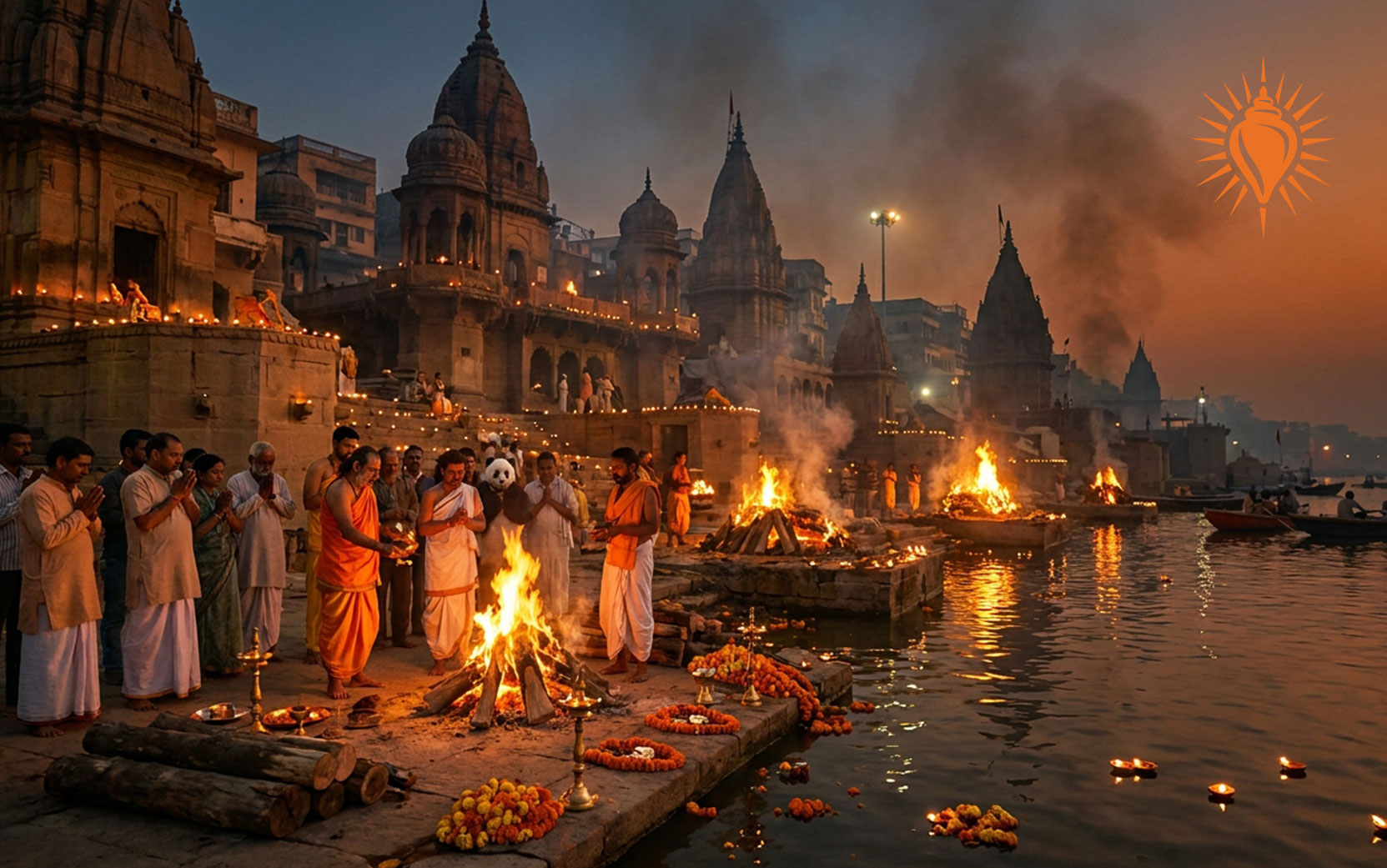
Varanasi
Manikarnika Ghat is one of the most spiritually significant places in Varanasi and holds immense importance in Hindu tradition. Situated on the banks of the sacred Ganga River, this ancient ghat is primarily known as a sacred cremation site where Hindu funeral rites have been performed continuously for centuries.
According to Hindu mythology, the name “Manikarnika” originated when Goddess Parvati’s jeweled earring (Manikarn) fell at this sacred spot. Scriptures such as the Skanda Purana and Kashi Khand describe this ghat as a divine place closely associated with Lord Shiva and the path to liberation (moksha).
It is believed that souls cremated or honored here attain freedom from the cycle of birth and death. For this reason, devotees from across India and around the world visit Manikarnika Ghat to perform sacred rituals such as Asthi Visarjan, Pind Daan, Tarpan, and Shradh ceremonies for their ancestors.
The spiritual atmosphere of the ghat, combined with the chanting of Vedic mantras and the continuous flow of the holy Ganga, creates a deeply powerful and emotional experience. Despite being a cremation ground, Manikarnika Ghat symbolizes the eternal truth of life, spirituality, and liberation in Sanatan Dharma.
Visiting Manikarnika Ghat is considered a profound spiritual experience that reflects devotion, faith, and the timeless connection between life, death, and salvation.
How It Works
Browse rituals and select a package
Secure payment and share your details
Performed at your home or sacred teerth locations
1 Acharya + All Puja Material
Asthi Visarjan performed at the sacred Manikarnika Ghat in Varanasi is regarded as one of the most important and spiritually liberating rituals in Hindu tradition. According to Sanatan Dharma, after death the human body merges back into the five elements of nature, and the remaining ashes after cremation are immersed in a holy river through a ritual known as “Asthi Visarjan.”
It is believed that immersing the ashes in the holy Ganga of Kashi grants peace, salvation, and moksha to the departed soul. Scriptures such as the Skanda Purana and Garuda Purana describe Kashi as the divine city of Lord Shiva and a sacred place capable of granting liberation. Devotees believe that Lord Shiva himself blesses souls here with the Tarak Mantra, freeing them from the cycle of birth and death. Because of this belief, people from across India and around the world visit Kashi to perform Asthi Visarjan and Pitru rituals for their ancestors.
Manikarnika Ghat is considered one of the oldest and holiest ghats in Hindu tradition. According to mythology, Goddess Parvati’s jeweled earring (“Manikarn”) fell at this spot, giving the ghat its name. For centuries, it has remained a major center for cremation rituals, Pind Daan, and ancestral ceremonies. It is believed that rituals performed here help the departed soul attain eternal peace and liberation.
Asthi Visarjan is generally performed on the 3rd, 5th, 7th, 9th, or 10th day after death. Morning hours after sunrise are considered most auspicious. If the family cannot immediately travel to Kashi, the ashes may be preserved and immersed later. Hindu scriptures state that performing Asthi Visarjan in the Ganga helps pacify Pitru Dosha, satisfies ancestral souls, and brings peace and harmony to the family.
The ritual begins with Vedic chanting and a sacred sankalp. The name and gotra of the departed soul are recited at the banks of the Ganga, followed by worship of the ashes using Gangajal, sesame seeds, flowers, milk, and sacred offerings. Depending on the family’s wishes, rituals such as Pind Daan and Tarpan may also be performed. Thereafter, the family proceeds by boat to the middle of the Ganga where the Asthi Visarjan is completed according to Vedic traditions. The ceremony concludes with peace prayers, blessings, and a holy bath in the Ganga.
Rituals Included in the Ceremony
7 items included
Questions about packages? Chat with us about Asthi Visarjan
WhatsAppDevotee Testimonials
“The entire process was seamless. The pandit performed the Satyanarayan Puja with complete devotion and we received the video proof the same day.”
Priya Sharma
Mumbai• Satyanarayan Puja
“Living abroad, I was worried about getting authentic puja done at Kashi. Pujariji handled everything — from samagri to sankalp. Highly recommended!”
Rajesh Gupta
San Francisco, USA• Rudrabhishek
“Booked Graha Shanti puja for my new home. The pandit was very knowledgeable and explained every step. The video recording was a wonderful touch.”
Meena Iyer
Bangalore• Graha Shanti Puja
Choose a package above or send an enquiry — our team will confirm your date and details.